
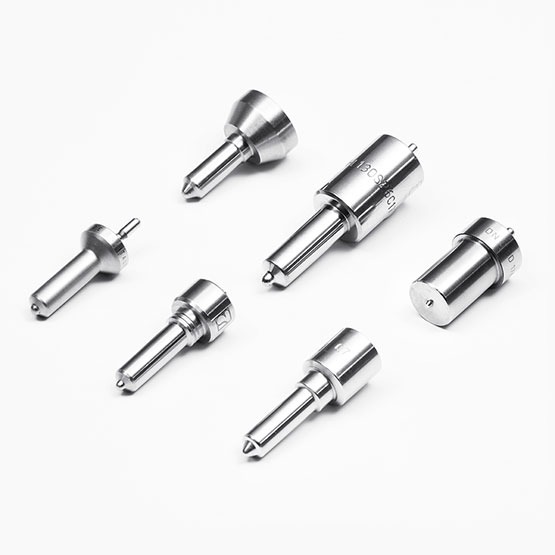
Key notes and specifications to check when selecting or inspecting nozzles
1. OEM compliance: Ensure the nozzle matches the engine’s specifications (type, injection pattern, system pressure).
2. Spray pattern: Uniform and spec-compliant spray is essential for even combustion.
3. Flow rate & tolerance: Large variations between nozzles cause cylinder imbalance and loss of performance.
4. Leak tightness: No leakage at the seat/needle is essential to maintain timing and flow.
5. Hardness & wear resistance: Materials and finishes must withstand long service life and diverse fuels.
6. Fuel compatibility: Verify compatibility with biodiesel, ULSD, or fuels containing additives.
7. Manufacturing tolerance & surface finish: Precise dimensions and smooth finishes reduce deposit formation and increase life.
8. Resistance to cooking/blockage: Designs reducing sac volume and minimizing deposit accumulation are preferred.
9. Serviceability & parts availability: Original spare availability and test facilities matter for maintenance.
Essential tests and inspections
Spray pattern bench test: Verify spray distribution and symmetry.
Flow test: Measure delivered fuel quantity at a given pressure and compare to tolerance.
Leak test: Confirm proper sealing when the needle is seated.
Endurance/pressure/temperature tests: Simulate prolonged field conditions.
Microscopic inspection of orifices: Detect erosion, deformation, or contamination.
Conclusion
Choosing the right diesel injector nozzle requires understanding your engine type, injection system, and local fuel characteristics. Material quality, precision manufacturing, and rigorous testing are decisive for nozzle life and engine performance. When in doubt, rely on OEM parts or trustworthy suppliers and have nozzles tested in a proper bench to ensure economy, performance, and emissions compliance.